Subway Tuna Bowl Menu with Prices, Calories & Nutrition
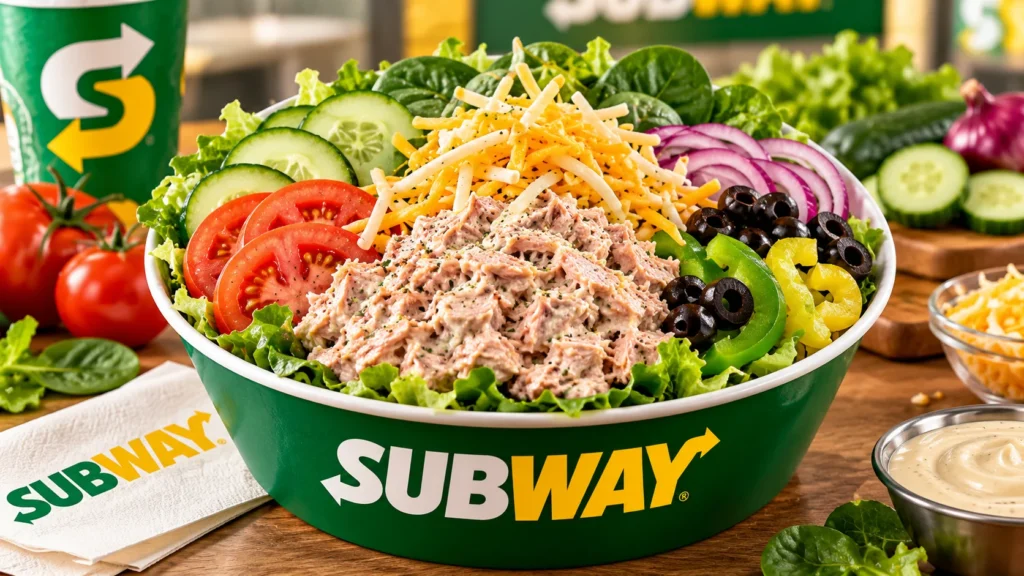
The Subway Tuna Bowl is the bread-free version of the chain’s classic Tuna Sandwich. It takes creamy tuna salad and piles it over crisp lettuce, spinach, tomatoes, cucumbers, and other fresh toppings. It is popular with seafood lovers, low-carb eaters, and anyone who wants a protein-rich high-protein meal without the bread. This guide covers what’s in it, what it costs, its calories and nutrition, how healthy it is, and the best ways to customize it.
What Is a Subway Tuna Bowl?
A Subway Tuna Bowl is a protein bowl made from the same fillings as a Tuna Sandwich, served over a bed of greens instead of inside a roll. Think of it as a deconstructed sandwich: tuna salad (tuna blended with mayonnaise) layered over lettuce and spinach, then topped with the vegetables, cheese, and sauces you choose.
If you’ve wondered what’s in a Subway Tuna Bowl, the core is simple: tuna salad plus fresh vegetables. From there it’s fully customizable, so you can build a light, low-calorie bowl or a loaded one with Monterey Cheddar cheese, avocado, and creamy dressings. Because it skips the bread, it works as a low-carb meal for people cutting refined carbs.
Subway Tuna Bowl Ingredients
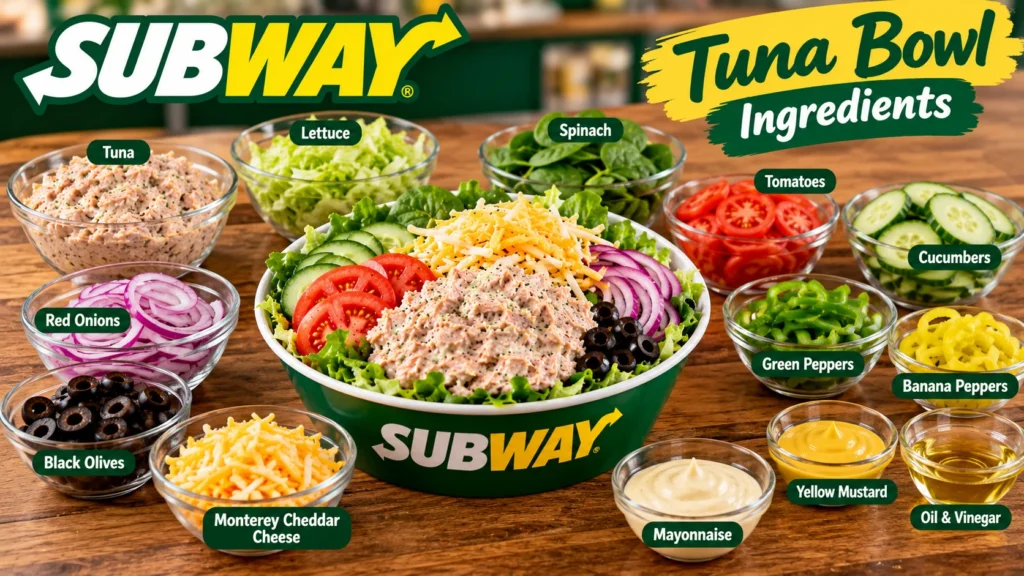
A standard Subway Tuna Bowl is built from a few simple components.
The tuna mixture. The base is tuna salad: flaked tuna blended with mayonnaise. This creamy mix supplies most of the bowl’s protein, along with most of its fat and calories.
Fresh vegetables. Bowls are typically built on lettuce and spinach, then topped with:
- Tomatoes
- Cucumbers
- Red onions
- Black olives
Green peppers and pickles are also commonly available.
Cheese options. Monterey Cheddar cheese adds a sharp, creamy contrast to the tuna. Other cheeses may be offered depending on your location.
Sauce choices. The tuna salad is already creamy, so many people skip extra sauce. If you want one, lighter options like mustard or oil and vinegar add flavor without piling on calories.
Subway Tuna Bowl Price
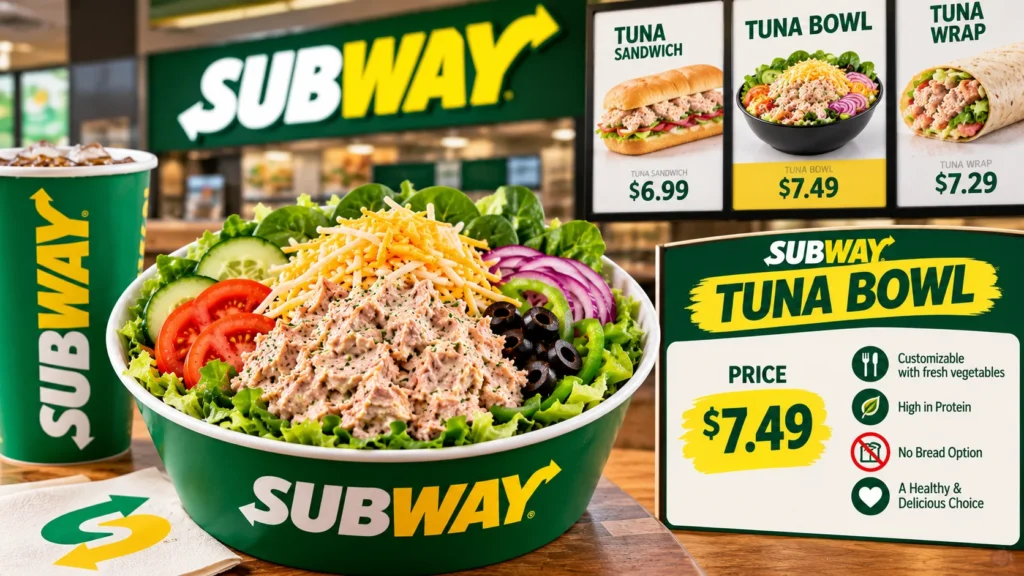
Prices vary by country, city, and franchise, so check your local menu or the Subway app for exact figures. Some general patterns hold:
- Average price range: In the US, a Tuna Bowl typically costs about the same as a 6-inch Tuna Sub, usually around $7 to $10. This is an estimate, not a fixed price.
- Regional pricing differences: Prices run higher in big cities, airports, and tourist areas, and lower in smaller markets. Franchise owners set their own pricing.
- Value compared to sandwiches: The bowl is usually priced close to the sandwich, so skipping the bread doesn’t save money. The value is in the lower carbs and the freedom to customize. Extras like avocado, double tuna, and extra cheese cost more.
Watch the Subway app for deals and bundles, which can lower the effective price. You may like to Explore Subway Full Menu.
Subway Tuna Bowl Calories & Nutrition
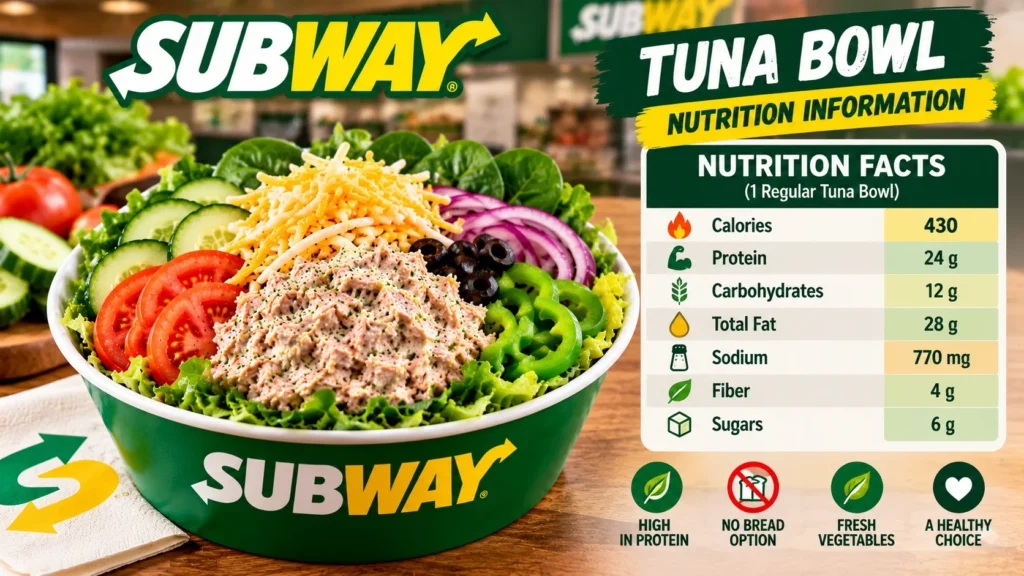
Exact numbers change with your toppings and Subway’s current recipe, so use Subway’s online nutrition calculator for your specific build. The table shows approximate values for a standard bowl with the usual vegetables and no cheese or extra sauce.
| Nutrient | Approximate Amount |
|---|---|
| Calories | 300–400 |
| Protein | 15–20 g |
| Carbs | 6–10 g |
| Fat | 25–30 g |
| Sodium | 400–600 mg |
Macronutrients. The bowl is high in protein and fat and low in carbohydrates. Most of the fat comes from the mayonnaise in the tuna salad.
Protein content. Tuna is a lean, protein-dense fish, so the bowl delivers a solid serving that supports fullness and muscle maintenance.
Health considerations. Watch the fat from mayonnaise, the sodium from tuna salad and cheese, and added calories from creamy sauces. Tuna can contain mercury, so health authorities advise limiting frequency, especially for pregnant women and young children.
Is the Subway Tuna Bowl Healthy?
It can be, depending on how you build it.
Pros
- High in protein and low in carbs
- No bread, so fewer refined carbohydrates
- Loaded with spinach, tomatoes, and cucumbers
- A convenient low-carb meal when eating out
Cons
- Mayonnaise makes it relatively high in fat and calories
- Sodium can add up with cheese and pickled toppings
- Mercury considerations if eaten very frequently
Best healthy modifications
- Add extra spinach, cucumbers, tomatoes, and red onions
- Skip the cheese or ask for a smaller portion
- Choose mustard or oil and vinegar over creamy dressings
- Add avocado for healthy fats if you have calories to spare
High Protein Subway Tuna Bowl
For gym-goers, the Tuna Bowl is a strong base. A standard serving already provides a meaningful amount of protein, and you can raise it further.
- Double protein: Ask for double tuna to roughly double the protein, with a matching rise in calories and fat.
- Add cheese: Monterey Cheddar adds a few extra grams of protein.
- Pile on vegetables: Extra greens add volume and fiber so the bowl keeps you full.
- Keep it lean: Skip creamy sauces and use mustard or vinegar for flavor.
These gym-friendly customizations make an easy high-protein meal for cutting, bulking, or maintenance.
Subway Bowl Menu with Prices, Calories & Pictures (2026 Guide)
Subway Tuna Bowl Customization Options
One of the best things about the Tuna Bowl is how flexible it is. You control the vegetables, cheese, sauces, and extras, so the same base can become a light lunch or a loaded meal.
Best Vegetables
Spinach, lettuce, cucumbers, tomatoes, and red onions are the classic combination. Add black olives for a briny kick.
Best Cheese Choices
Monterey Cheddar pairs well with the creamy tuna. If you’re watching calories, go light or skip it.
Best Sauces
Since the tuna salad is already creamy, lighter sauces work best: mustard, oil and vinegar, or red wine vinegar.
Low-Calorie Customizations
- Skip the cheese
- Use mustard or vinegar instead of dressings
- Fill the bowl with extra greens and raw vegetables
- Avoid heavy dressings and oversized cheese portions
Subway Tuna Bowl vs Tuna Sandwich
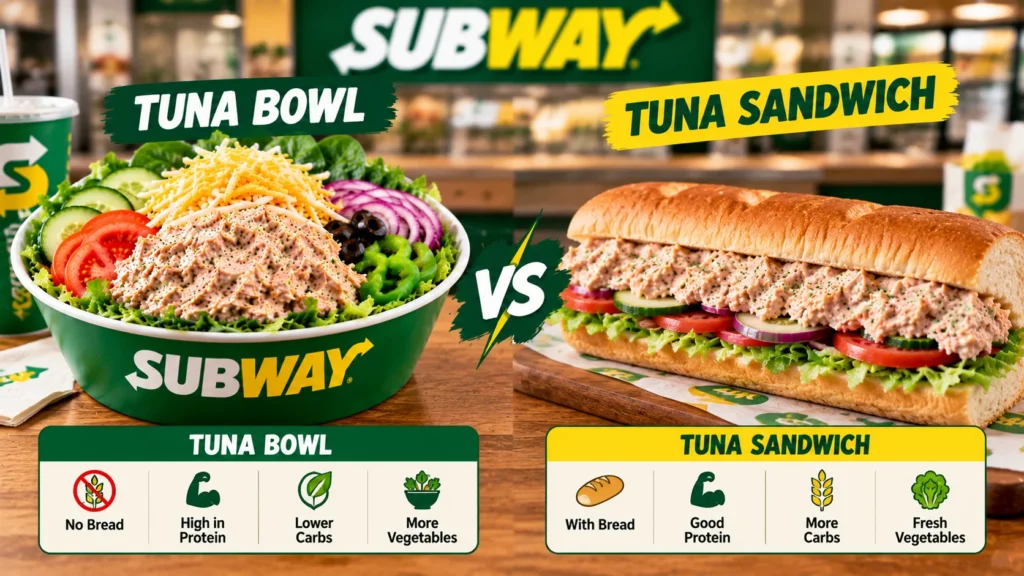
The fillings are the same, but the bread changes the numbers. These are approximate.
| Feature | Tuna Bowl | Tuna Sandwich (6-inch) |
|---|---|---|
| Calories | Lower (about 300–400) | Higher (about 450–500+) |
| Carbs | Low (about 6–10 g) | Higher (about 40+ g) |
| Protein | Similar | Similar |
| Bread | None | Yes |
Nutrition comparison. The bowl cuts most of the carbs and a good share of the calories. Protein stays about the same.
Taste comparison. The sandwich offers soft, chewy bread and a classic handheld experience. The bowl is lighter and fresher, with more focus on the tuna and crisp vegetables.
Which suits different goals. Choose the bowl for low-carb eating or calorie control. Choose the sandwich for a more filling, traditional meal when carbs aren’t a concern.
Best Add-Ons for a Subway Tuna Bowl
- Avocado: Creamy and rich, with healthy fats that make the bowl more filling.
- Jalapeños: Bring heat that cuts through the creamy tuna.
- Banana peppers: Mild and tangy, a great contrast to the mayo-based salad.
- Pickles: Add crunch and acidity for deli-style flavor.
- Monterey Cheddar cheese: Adds sharpness and a bit of extra protein.
Add-ons like avocado and cheese raise both calories and price.
Frequently Asked Questions
What is in a Subway Tuna Bowl?
Tuna salad (tuna mixed with mayonnaise) over lettuce and spinach, topped with tomatoes, cucumbers, red onions, black olives, and optional cheese and sauces.
How much does a Subway Tuna Bowl cost?
Generally close to a 6-inch Tuna Sub. Check your local Subway or the app for exact pricing.
How many calories are in a Subway Tuna Bowl?
Roughly 300 to 400 calories for a standard bowl. Cheese, avocado, and creamy sauces increase that.
Is the Subway Tuna Bowl healthy?
It’s high in protein, low in carbs, and full of vegetables, but the mayonnaise makes it fairly high in fat and calories. Light sauces and plenty of vegetables keep it healthier.
Does Subway use real tuna?
Subway states its tuna is real fish. The claim was challenged in a well-publicized lawsuit, which Subway disputed. Check Subway’s official statements for the latest.
Can I customize my Tuna Bowl?
Yes. Choose your vegetables, cheese, sauces, and add-ons like avocado, jalapeños, and banana peppers.
Is the Tuna Bowl keto-friendly?
It can be. Its low carbs and high fat fit many keto plans if you stick to low-carb vegetables and avoid sugary sauces.
Which vegetables go best with a Tuna Bowl?
Spinach, lettuce, cucumbers, tomatoes, and red onions. Black olives and banana peppers add extra flavor.
Conclusion
The Subway Tuna Bowl is a simple, flexible, protein-rich option: creamy tuna salad over fresh greens and vegetables, without the bread. It typically lands around 300–400 calories with low carbs and costs about the same as a Tuna Sandwich. Customizations like Monterey Cheddar, avocado, jalapeños, and banana peppers let you tune it for flavor or nutrition goals.
It’s best for low-carb eaters, fitness-minded people after a high-protein meal, and seafood fans who want a lighter alternative to the sandwich.
Note: Prices and nutrition figures are approximate. Verify against Subway’s official nutrition calculator and local menu before publishing.